
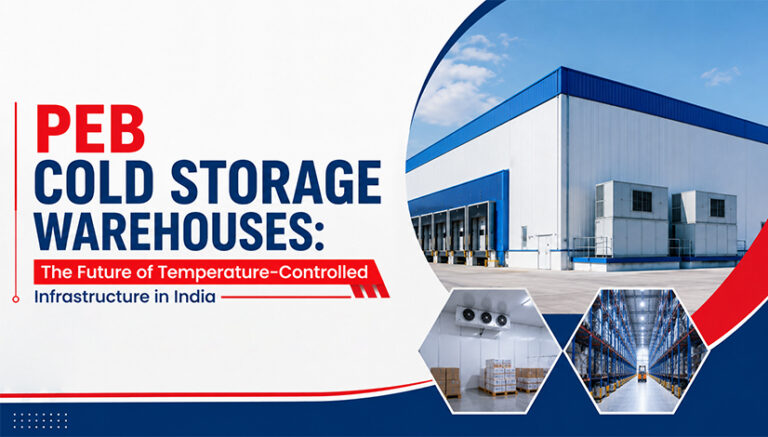
India’s supply chain is changing fast. Food processors, pharma distributors, exporters, quick-commerce brands and agriculture businesses now need buildings that can protect products from heat, humidity, delays and temperature fluctuation. This is why PEB Cold Storage Warehouses are becoming a future-ready choice for temperature-controlled infrastructure in India. They combine fast construction, strong steel framing, insulated panels and scalable layouts to create cold storage facilities that are practical for modern business needs.
A cold storage facility is not only a chilled room. It is a controlled environment where structure, insulation, refrigeration, loading movement and monitoring must work together. When this planning is done through pre-engineered construction, businesses can build faster and reduce many project risks. For companies that want long-term performance with quicker commissioning, PEB Cold Storage Warehouses offer a smart alternative to slow conventional construction.
Why India Needs Better Temperature-Controlled Warehouses
India handles a large volume of perishable goods such as fruits, vegetables, dairy, frozen foods, seafood, medicines, vaccines, chemicals and spices. These products need the right temperature from storage to dispatch. Even a small temperature break can affect quality, shelf life and safety. According to Wikipedia’s explanation of the cold chain, refrigerated storage and distribution help maintain perishable and temperature-sensitive goods from production to consumption.
The demand for reliable cold storage is also becoming more unpredictable. A Times of India report from April 2026 highlighted how export disruptions increased cold storage demand for spices and pulses in parts of Madhya Pradesh. This shows why businesses need flexible cold chain infrastructure that can respond to seasonal, export-led and regional demand changes. These warehouses support this need because they can be designed for speed, expansion and multiple product categories.
What Makes PEB Cold Storage Warehouses Different?
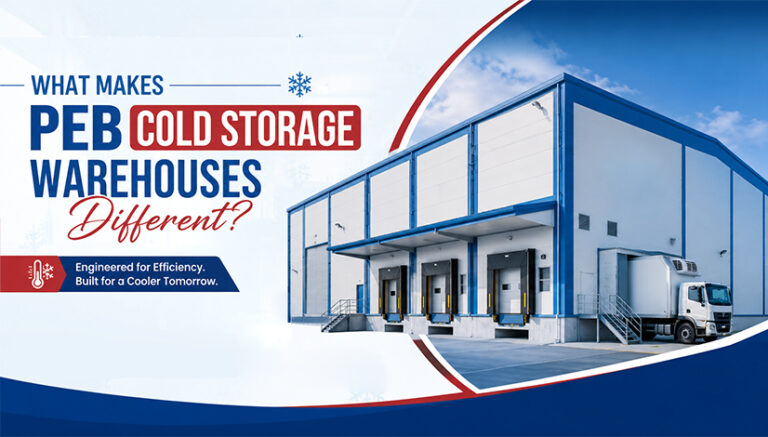
PEB stands for pre-engineered building. In this method, steel components are designed, fabricated and delivered to the site for quick assembly. For cold storage, the PEB structure is combined with insulated wall and roof panels, refrigeration planning, vapour barriers, dock systems and controlled airflow.
The major difference is planning. PEB Cold Storage Warehouses are designed around operations from the beginning. The layout may include chilled chambers, frozen rooms, dry storage, packing zones, loading docks, utility areas and staff movement paths. This helps reduce energy leakage and improves product handling.
PEB Cold Storage Warehouses Enable Faster Construction
Time matters in food, pharma and logistics projects. Delayed infrastructure can affect procurement, contracts and distribution plans. Because PEB components are manufactured off-site, foundation work and fabrication can move together. This makes PEB Cold Storage Warehouses faster to complete than many RCC-based cold storage buildings.
PEB Cold Storage Warehouses Offer Scalable Design
Business demand can change after a facility is built. A company may need extra frozen storage, a new dispatch bay or a separate pharma chamber. The modular nature of PEB Cold Storage Warehouses makes future expansion easier compared with rigid conventional structures.
Benefits of PEB Cold Storage Warehouses for Indian Businesses
The biggest benefit is the balance of speed, durability and efficiency. Steel framing allows wide spans with fewer internal columns. This gives better movement for forklifts, pallets and racking systems. Large clear spaces also make chamber partitioning easier.
Another advantage is quality control. Factory fabrication improves accuracy and reduces site errors. This is important because gaps, poor sealing and thermal bridges can increase cooling load. Well-planned PEB Cold Storage Warehouses help reduce these problems through coordinated engineering.
Energy performance is another major benefit. Refrigeration can be one of the highest operating costs in a cold storage project. If the roof, walls, doors and loading bays are not properly designed, energy loss increases. These warehouses can support insulated building envelopes, proper roof slopes, air sealing and efficient dock planning.
Design Elements for Energy-Efficient Cold Storage
A high-performing cold storage facility starts with the right design. The first step is temperature zoning. Products that need 2 to 8 degrees Celsius should not be stored in the same chamber as frozen products. These warehouses can be planned with multiple thermal zones for food, pharma and frozen goods.
Insulated Panels for Prefabricated Cold Storage
PUF and PIR insulated panels are commonly used for cold storage walls and roofs. The panel thickness should match the temperature requirement, climate, product type and refrigeration load. In PEB Cold Storage Warehouses, the panel system must connect tightly with the steel frame to reduce heat transfer.
Loading Bays, Doors and Air Sealing
A large amount of temperature loss happens near doors and docks. High-speed doors, dock shelters, strip curtains, air curtains and sealed joints can reduce warm air entry. A good plan for PEB Cold Storage Warehouses separates receiving and dispatch movement so doors are not opened unnecessarily.
Flooring and Vapour Protection
Cold storage floors must handle pallet load, forklift movement and temperature stress. Freezer zones also need vapour barriers and floor insulation to reduce condensation and frost problems. This is why such facilities should be planned by teams that understand both structural engineering and cold room performance.
Industries That Need Prefabricated Cold Storage Solutions
Food processing companies can use PEB Cold Storage Warehouses for dairy, meat, seafood, frozen snacks, fruits, vegetables and ready-to-eat products. Pharma companies can use them for medicines, vaccines and healthcare products that need strict temperature control.
Agriculture businesses can use these facilities near production clusters for grading, ripening, packing and storage. Exporters can store spices, pulses and perishables before shipment. E-commerce and quick-commerce companies can use PEB Cold Storage Warehouses as regional fulfilment hubs for fresh and frozen goods.
PEB Cold Storage Warehouses vs Conventional Buildings
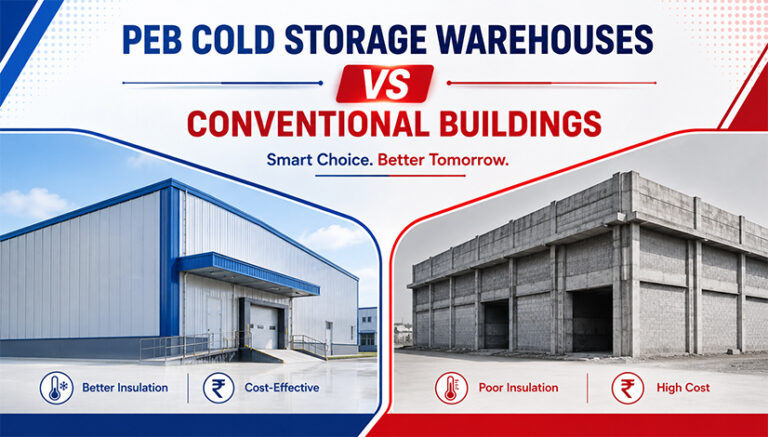
Conventional RCC cold storage buildings can be strong, but they usually take more time and are harder to expand. They may involve longer curing time, more site dependency and less flexibility for large column-free spans. PEB Cold Storage Warehouses are more suitable when a business needs faster delivery, predictable execution and future-ready expansion.
For companies comparing construction models, Multi Decor’s PEB Warehouse Construction guide explains how pre-engineered warehouse systems support faster timelines, reliable structures and cost-efficient industrial facilities. This makes the PEB model a strong option for businesses planning modern storage infrastructure.
Why Choose Multi Decor for PEB Cold Storage Warehouses?
Multi Decor India Pvt. Ltd. has experience in pre-engineered and prefabricated building solutions for industrial and commercial projects. The company works across PEB structures, prefabricated warehouses, industrial sheds and modular infrastructure applications.
For cold storage projects, the right partner must understand design capability, fabrication quality, installation discipline, insulation coordination and future expansion. Multi Decor can help businesses plan PEB Cold Storage Warehouses based on chamber size, storage type, site conditions and operational goals. To discuss a custom project, businesses can connect through the Multi Decor Contact Us page.
FAQs on PEB Cold Storage Warehouses
They are pre-engineered steel buildings designed with insulation, refrigeration systems and controlled zones to store temperature-sensitive products safely.
Yes. With proper insulation, monitoring, refrigeration design and compliance planning, they can support food, dairy, frozen goods, vaccines and pharma logistics.
Yes. Since major steel components are factory-made and assembled on-site, they can reduce construction time compared with many conventional cold storage structures.
Yes. Their modular design allows businesses to add chambers, storage bays, dispatch areas or utility spaces as demand grows.
Final Thoughts
The future of India’s cold chain depends on speed, scalability, energy efficiency and reliable temperature control. PEB Cold Storage Warehouses bring these qualities together in one construction approach. They help businesses build modern facilities for food, pharma, agriculture, logistics and exports while keeping future growth in mind.
As temperature-controlled infrastructure becomes more important, companies that invest in smarter building systems will gain an operational advantage. For businesses planning a new facility, These warehouses offer a durable, flexible and future-ready solution for India’s changing supply chain needs.